7 Common Azure Kubernetes Service (AKS) Mistakes That Cause Downtime
- May 7
- 4 min read

Kubernetes has become one of the most widely adopted platforms for running modern applications at scale. Combined with Azure Kubernetes Service, businesses gain access to a powerful cloud-native platform capable of supporting highly resilient infrastructure.
However, many organizations discover that deploying Kubernetes is only the beginning.
Without the correct architecture, operational visibility, and governance, Kubernetes environments can quickly become unstable, difficult to manage, and prone to outages.
Here are seven of the most common AKS mistakes that frequently lead to downtime, operational issues, and performance instability.
1. Poor Observability and Monitoring
One of the biggest operational mistakes in Kubernetes environments is relying on traditional infrastructure monitoring alone.
Kubernetes environments are highly dynamic:
Containers restart constantly
Workloads scale automatically
Networking paths change dynamically
Applications are distributed across nodes
Without centralized observability, teams often struggle to:
Identify failures quickly
Trace application issues
Diagnose networking problems
Understand performance bottlenecks
Many outages become significantly longer simply because there is insufficient visibility into the environment.
Common Symptoms
“Everything looks healthy” while applications fail
Slow incident response times
Incomplete logs
Alert fatigue
Missing root-cause data
Best Practice
Implement centralized observability that includes:
Metrics
Logs
Traces
Infrastructure monitoring
Application monitoring
Alert correlation
2. Running Everything on a Single Node Pool
Many businesses initially deploy AKS using a single node pool for all workloads.
While this works for small environments, it becomes risky as platforms grow.
Different workloads often have very different requirements:
APIs
Databases
Batch jobs
Monitoring systems
Ingress controllers
CI/CD runners
Running everything together can lead to:
Resource contention
Noisy neighbor problems
Instability during scaling events
Poor workload isolation
Best Practice
Separate workloads using dedicated node pools for:
System workloads
Production applications
Observability tooling
Specialized compute requirements
This improves both reliability and operational control.
3. Ignoring Network Design Early
Networking is one of the most underestimated aspects of Kubernetes.
Poor network planning often leads to:
DNS instability
Connectivity failures
Ingress problems
Performance bottlenecks
Security exposure
As environments grow, these problems become increasingly difficult to fix without major redesigns.
Common AKS Networking Issues
Overlapping IP ranges
Poor ingress architecture
Lack of internal/private routing
Weak segmentation
Incorrect firewall rules
Inconsistent DNS resolution
Best Practice
Design networking properly from the beginning:
Define address space carefully
Deparate internal and external traffic
Implement network policies
Standardize ingress patterns
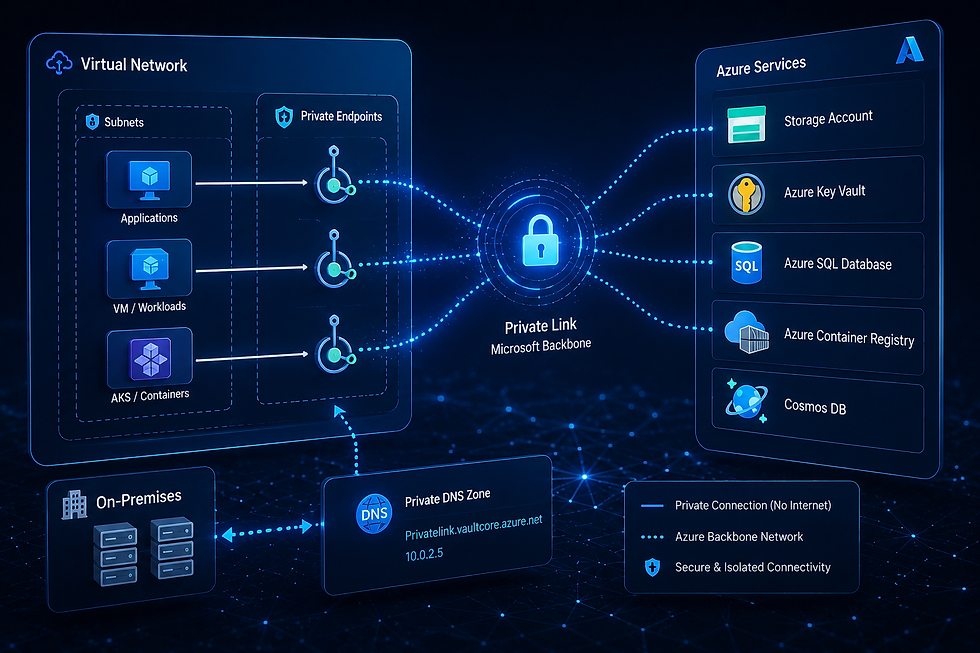
Plan private connectivity early
4. Weak Identity and Access Management
Overly broad permissions are extremely common in Kubernetes environments.
Many organizations unintentionally grant excessive access to:
Developers
Automation accounts
Workloads
CI/CD systems
This increases both operational risk and security exposure.
Common Problems
Cluster-admin permissions everywhere
Unmanaged secrets
Shared credentials
Excessive Azure RBAC permissions
Poor service identity separation
Best Practice
Adopt:
Least-privilege access
Managed identities
Role-based access control
Workload identity
Centralized secrets management
Security should be built into the platform from the start — not added later.
5. No GitOps or Infrastructure Standardization
Manual Kubernetes changes are one of the fastest ways to create configuration drift and instability.
Without proper deployment automation:
Environments become inconsistent
Troubleshooting becomes difficult
Rollback processes become risky
Undocumented changes accumulate over time
Common Symptoms
“It works in one cluster but not another”
Unexpected deployment behavior
Inconsistent configurations
Manual emergency fixes that are never reverted
Best Practice
Use GitOps and infrastructure-as-code practices to:
Standardize deployments
Version infrastructure changes
Improve rollback capability
Reduce manual intervention
Create auditability
Automation dramatically improves long-term platform stability.
6. Underestimating Cost Visibility
Kubernetes can scale rapidly — but so can cloud costs.
Many businesses initially focus only on uptime and performance while ignoring:
Idle workloads
Oversized node pools
Inefficient scaling
Unnecessary storage usage
Excessive logging retention
Over time, operational costs become unpredictable.
Common Cost Drivers
Overprovisioned infrastructure
Uncontrolled autoscaling
Unused resources
Inefficient workload placement
Duplicated tooling
Best Practice
Implement cloud cost governance early:
Monitor workload utilization
Right-size infrastructure
Define scaling policies
Review unused resources regularly
Optimize observability retention
Operational visibility should include both technical health and financial health.
7. Treating Kubernetes Like Traditional Infrastructure
Kubernetes is not simply “virtual machines with containers.”
Many operational issues happen because organizations continue using traditional infrastructure approaches in a cloud-native environment.
Common Examples
Manually managing workloads
Static scaling assumptions
Weak automation
Siloed operations teams
Reactive maintenance processes
Kubernetes requires:
Automation-first thinking
Platform engineering practices
Continuous operational visibility
Standardized deployment pipelines
Organizations that adapt operationally usually gain the most value from Kubernetes adoption.
Why Reliability Engineering Matters
Stable Kubernetes environments are not created accidentally.
Successful AKS platforms require:
Strong architecture
Operational discipline
Observability
Automation
Governance
Proactive maintenance
Reliability engineering becomes increasingly important as environments scale and workloads become business-critical.
Final Thoughts
Azure Kubernetes Service provides an excellent foundation for modern infrastructure, but long-term success depends heavily on platform design and operational maturity.
Many downtime incidents are not caused by Kubernetes itself — they are caused by:
Weak operational processes
Poor visibility
Inconsistent automation
Rushed architecture decisions
Businesses that invest in proper platform engineering typically achieve:
Improved uptime
Faster deployments
Stronger security
Better scalability
Lower operational risk
Need help improving your AKS environment?
KENNEDY & CO. digital provides Kubernetes platform engineering, observability, reliability consulting, and cloud operations services designed to help businesses build stable and scalable Azure environments.